Safe sport starts with safe adults: the Ukrainian Association of Football takes part in the certification program run by the Centre for the UCU Child Dignity Centre
A safe environment for children in sport is no less important than in schools or hospitals. Trust in a coach, the authority of adults, physical contact and spending a lot of time away from home make sport valuable for a child; however, it can also become a risk area. Recognising this, the team at the Ukrainian Association of Football has joined the certification programme run by the UCU Child Dignity Centre, entitled ‘Creating a Safe Environment for Children: Safety Policy in an Organization’.

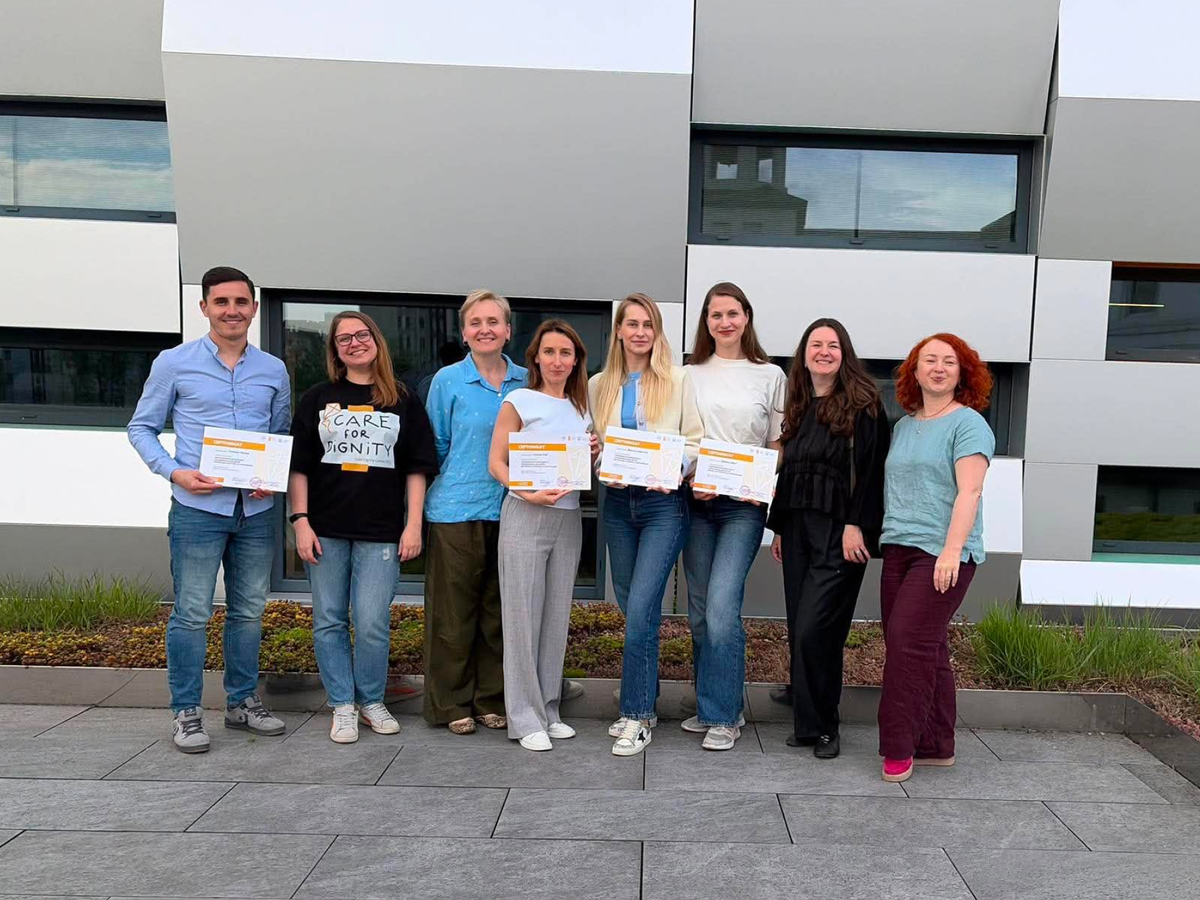
Representatives from the children’s and youth sector, social projects and the Ukrainian Association of Football’s Ethics and Fair Play Committee took part in the programme. The training took place on 3–4 June at the Sheptytsky Centre and marked the first collaboration between the UCU Centre for the Dignity of the Child and a national-level sports organisation.
“It is valuable for us to share our expertise with the association’s team. We are delighted to support organisations that are prepared to take proactive measures and create an environment where children can feel safe,” said Iryna Vakulina, head of the ‘Civil Society’ division at the UCU Child Dignity Centre.
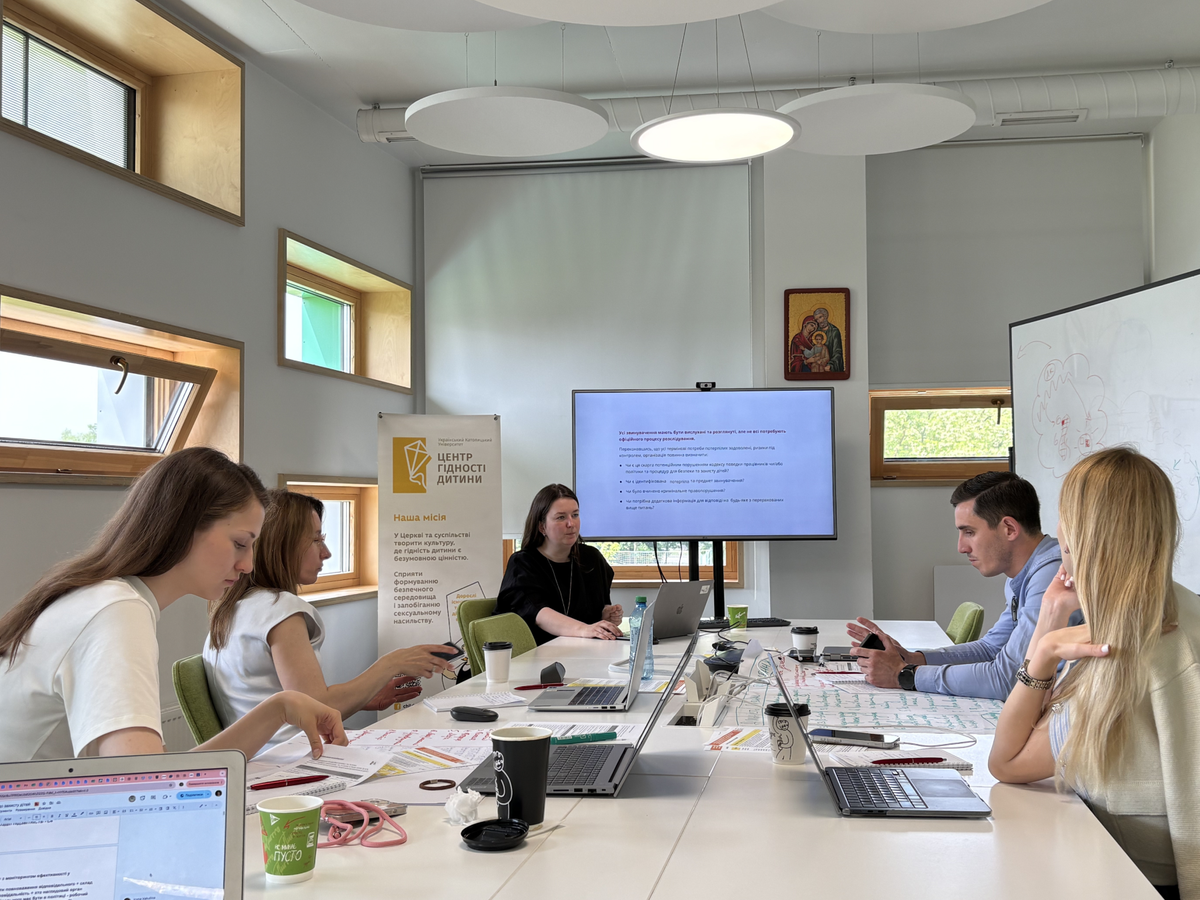
Over the course of two days, participants explored what a safe environment for children in a sports organisation entails and what role adults play in creating it.
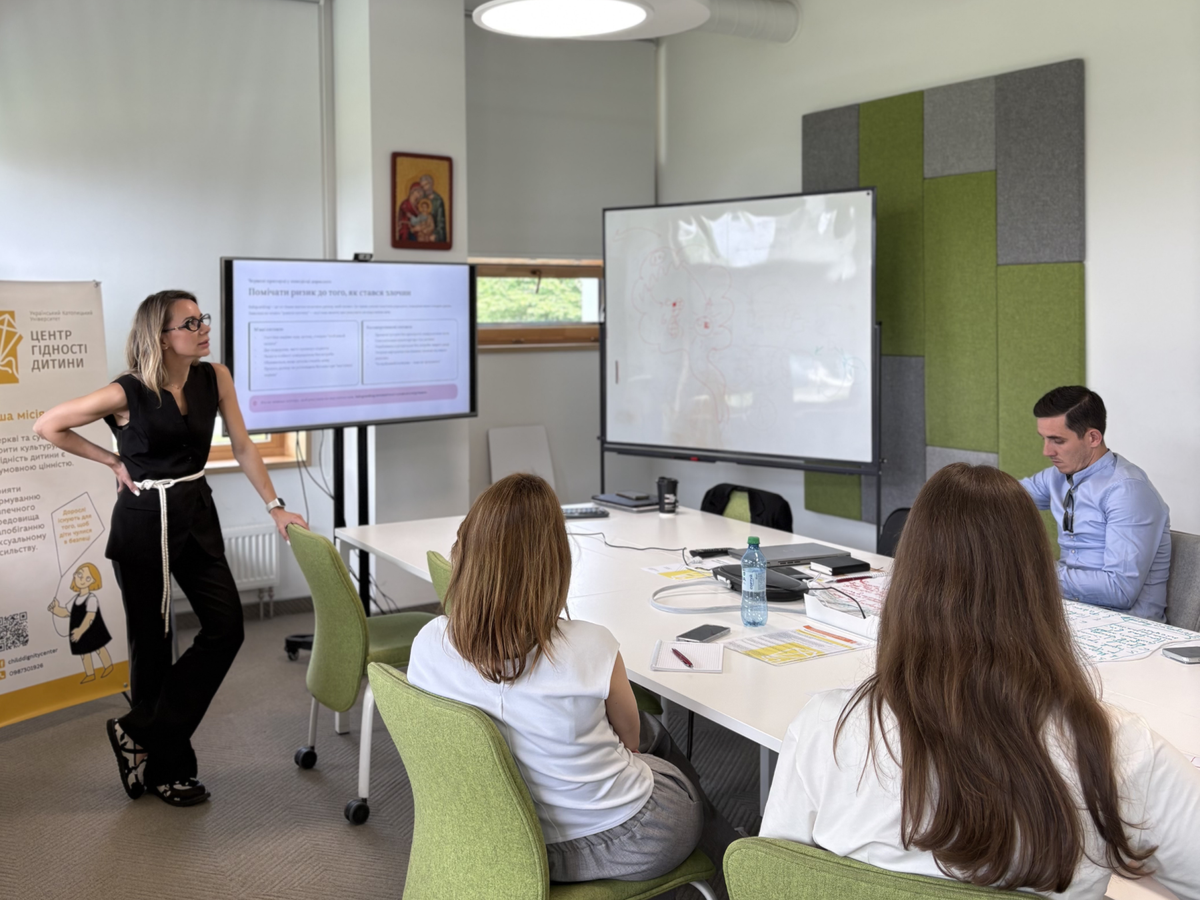
Khrystyna Shabat, head of the at the UCU Child Dignity Centre, explained that a child’s dignity is an unconditional value. She outlined what a child-friendly organisation should look like and why a child protection policy is one of the key tools for preventing violence.

The programme participants discussed the role of the child protection policy as a practical tool in the organisation’s day-to-day work.
“The policy must set out the rules for how we do – or do not – work, and be clear to everyone: children, coaches and parents. It is important that everyone knows how to use it and what to do in the event of breaches,” noted Daria Didenko, Social and Environmental Sustainability Manager at the UAF.
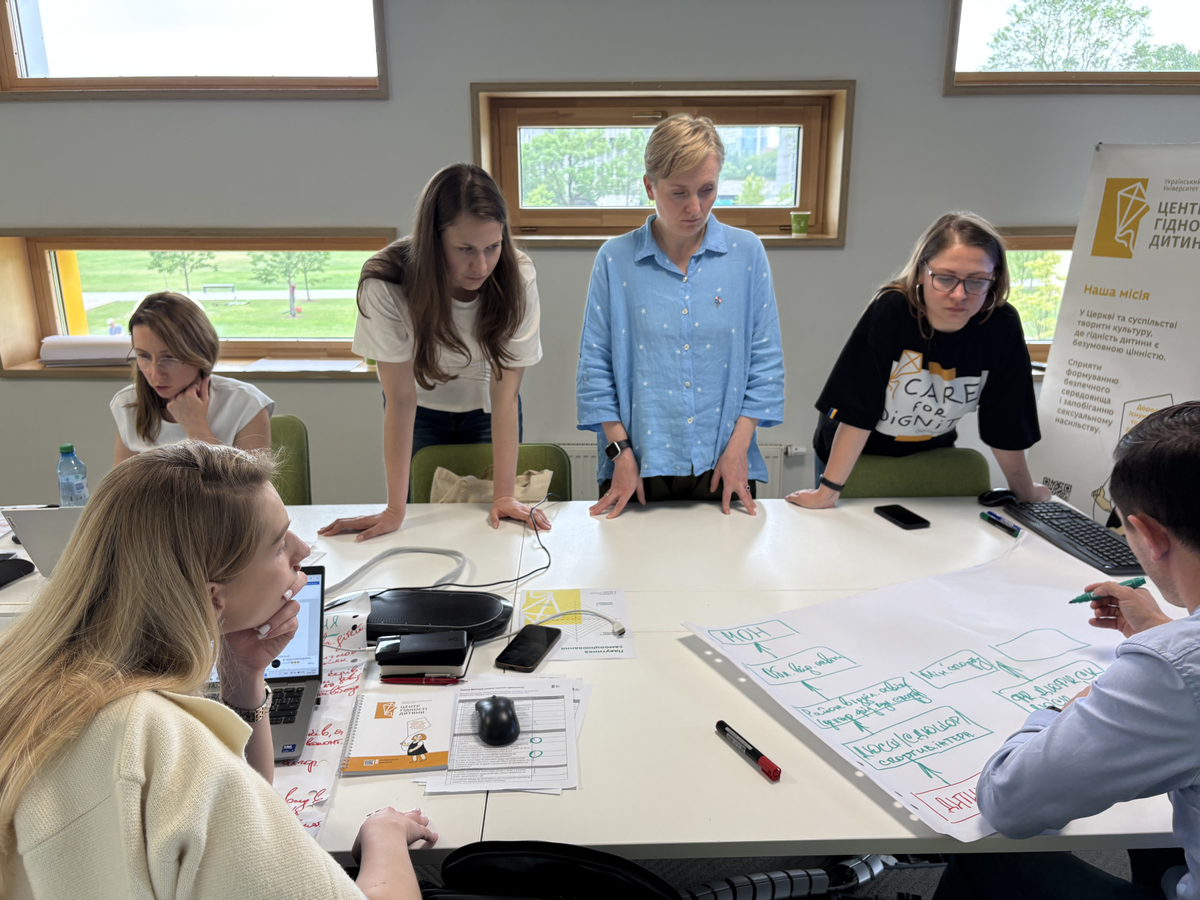
During practical group work, moderated by Ivanka Rudakevych, a safeguarding expert from the UCU Child Dignity Centre, participants analysed the challenges and potential threats to children in the football environment, assessed the association’s current child protection system and worked on proposals to improve it.
A key outcome of the programme was not only an understanding of the risks, but also clear protocols for action in situations where a child needs help.
“We have gathered here to learn and deepen our knowledge of how to protect children. Every adult needs to be aware that risks exist. It’s like first aid: when you know the procedure, you can keep a cool head in a difficult situation,” adds Anastasia Bilenko from the UAF’s Ethics and Fair Play Committee.

The programme included a lecture by child psychiatrist and psychotherapist Yuliana Maslak on recognising abuse. The expert explained why children often remain silent about difficult experiences and where the line between discipline and psychological abuse in sport lies.
Taras Chopilko, a participant in the certification programme and deputy head of the UAF’s children’s and youth football department, notes: “A coach is often a key figure for young footballers, and it is very important that they pay close attention to detail when working with children. After all, they can spot things that parents might miss: a child might be hiding problems at home, but will confide in a coach they trust.”
Following an intensive training programme, the participants developed a roadmap for implementing changes within the Ukrainian Football Association. They will continue working on drafting a Protection Policy with the support of experts from the Centre for the Dignity of the Child.
“The hardest part of implementing the policy and these changes will be convincing people of their necessity and rolling them out at all levels, as football is one of the most popular sports, and the association’s network spans a vast geographical area of Ukraine. We must be prepared for the fact that this is a long-term endeavour,” emphasises Lilia Kovtun, head of the UAF’s social projects department.

For thousands of children, football pitches, sports camps and away matches are part of everyday life. The Centre for Child Dignity understands the specific nature of the sporting environment and is ready to support organisations working with children in sport in building a culture of safety.
‘Tens of thousands, and perhaps even over a hundred thousand children are reached by the UAF through its activities every year. That’s a fantastic figure. I believe that the UAF will set the standard for the implementation of child protection policies for other federations as well. Because the people with whom we co-organised these two action-packed days are highly motivated to build an effective child protection system,” emphasised Khrystyna Shabat.