We help educational institutions become safer and more child-friendly. We create systems to protect against bullying and violence, implement safety rules and standards, and teach children and adults how to respond in challenging situations.
School is a place where children spend a significant part of their childhood. It is where their personalities take shape, where they learn to build relationships, understand their own boundaries, interact with their peers, and connect with adults. Every day, children face challenges in the educational environment that affect their safety, emotional well-being, and trust in the world around them.
That is why we want schools not only to provide knowledge, but also to ensure that every child has a relationship with a trusted adult — someone they can turn to when something goes wrong.
We help educational communities build a culture of safety where children know they will be heard and supported, and where adults have the tools to act responsibly, professionally, and in the best interests of the child.
To explore these challenges more deeply and understand what shapes children’s sense of safety, we conducted the “Child-Safe School” study.
The aim of the study was to identify the factors that influence children’s sense of safety in educational institutions and to find out whether children, parents, and teachers share the same understanding of what safety at school means.
The study involved 2,000 students, 800 parents, and teachers from 34 schools in the Lviv community. The findings revealed differences between how children and adults perceive safety, identified the factors that shape children’s sense of safety, and highlighted areas that require attention to improve safety in educational institutions.
Key findings:
Around one-third (36%) of students feel calm at school most of the time. 7% of surveyed children said they constantly experience anxiety during the learning process.
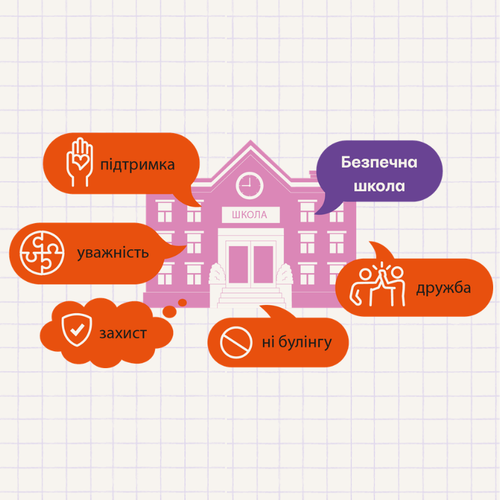
68% of surveyed students in Lviv said that positive relationships with teachers and classmates, the absence of bullying, and having friends have the greatest impact on their sense of safety at school.
61% of students have a trusted adult at school. Homeroom teachers are the adults students trust most when dealing with problems. If a student were to experience physical violence or bullying from others, 69% said they would turn to their homeroom teacher. At the same time, 21% of surveyed children said they feel the most anxious in the principal’s office.
16% of students said they witnessed teachers treating some students significantly better than others on a daily basis.
59% of students believe that a specially trained teacher responsible for safety would help them feel safer at school more than a police officer would.
The study highlights the importance of having a “trusted adult” at school and the need to systematically foster an atmosphere of trust and respect, as these factors have the greatest impact on children’s sense of safety.
To help schools confidently create a safe environment for children, we have developed a range of solutions for the entire educational community — school administrators, teachers, students, and parents. These include training, practical tools, programs, and resources that help people respond in a timely manner, recognize risks, and support children.
Our resources make it possible to build a systematic approach to fostering a culture of trust, respect, and responsible action in the best interests of the child.
Online Course for Educators
The Center’s team takes a comprehensive approach to developing educational programs, as our goal is to ensure that everyone who works with children knows how to prevent violence and act responsibly.
Safeguarding is a globally recognized approach to prevention aimed at protecting children from all forms of violence.
We have developed the online course “Safeguarding: Child Safety in Educational Environments” — a practical resource on how to create a safe environment in educational institutions. It is designed for teachers, educators, school psychologists, social workers, extracurricular activity leaders, and school administrators.
In this course, you will learn:
what components make up a safe educational environment;
who a “trusted adult” is and what role school safety officers play;
about different forms of violence: physical, psychological, sexual, economic, and harsh discipline;
how to recognize a potential abuser and protect a child;
how to respond when a child asks for help;
what steps to take when violence against a child is identified.
The course consists of six short videos with a total duration of 50 minutes, along with additional learning materials. After successfully completing the final test, participants receive a certificate.
Educators from ten regions of Ukraine have already successfully completed the program.
For educational institutions, we have developed a self-assessment tool that enables schools to determine their current level of safety, better understand students’ needs, and identify potential risks.
The “School Safety Assessment” tool is the first screening tool of its kind in Ukraine, developed based on the “Child-Safe School” study (2024). It helps communities, school administrators, and educators assess whether psychological, physical, or sexual violence occurs, whether bullying — including hidden forms — is present, and how effectively the school takes children’s needs into account.
The screening consists of three sections:
Absence of Threats — whether violence occurs in the educational institution, including its forms and duration;
Response to Threats — whether school administrators, educators, parents, and children know how to respond when risks arise;
Safe Environment — whether there is an atmosphere of trust and respect, as well as clear rules, procedures, and support mechanisms.
After completing the self-assessment, the school receives its results along with personalized recommendations, including selected online courses, guides, posters, and articles that can help strengthen safety in schools, lyceums, and gymnasiums.
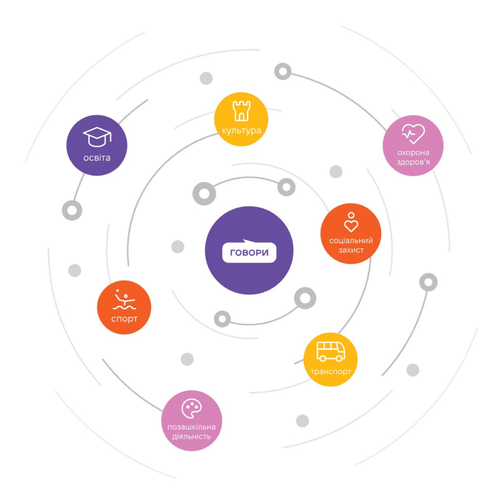
A child’s safety depends on the many environments they interact with every day — education, sports, culture, healthcare, transport, tourism, and others. That is why creating a safe environment for children requires cooperation between institutions that work with children and the community as a whole.
The team at the UCU Center for Child Dignity is therefore working to build a community-wide child safety ecosystem.
Our goal is to create, through the city’s institutions, a unified system for preventing violence against children, including municipal institutions and organizations that interact with children directly or indirectly. It is essential that child safeguarding standards are implemented across every sector, that adults understand their role in creating safe environments, and that children know their rights and where to turn for help.
The findings of the “Child-Safe School” study became the starting point for developing a systemic solution to improve child safety across the city. This led to the creation of the “SPEAK UP” project.
“SPEAK UP” is the first project in Ukraine aimed at building a culture of safety for children across the community. Its goal is to help city institutions become safer and more child-friendly in the areas of education, sports, culture, extracurricular activities, and youth work.
We launched the project’s pilot in 2025, starting with the education sector in the Lviv community. Here, “SPEAK UP” operates as an integrated system that includes:
implementing child safeguarding policies and clear response protocols for all schools in the Lviv community;
creating feedback mechanisms for children;
providing training for designated safeguarding staff in schools;
offering online courses and resources for students, educators, and parents.
“SPEAK UP” Safety Button
One of the project’s key tools is the “SPEAK UP” Safety Button — an online tool that allows children to quickly and confidentially ask for help if they feel unsafe or need support. The button is available in every student’s electronic school diary. Each report is automatically sent to the designated safeguarding officer, the school principal, and the Education Department, triggering an established response protocol.
The “SPEAK UP” project is being implemented in the Lviv community in partnership with the Lviv City Council, the Department of Humanitarian Policy, and the Department of Education and Culture of the Lviv City Council. 128 schools across the city are participating in the project.
One of the key elements in preventing violence against children is teaching them the basics of personal safety. Children need to know how to protect their boundaries, recognize risks, and understand who they can turn to for help.
That is why, as part of the “SPEAK UP” project, we created a series of online courses called “Your Personal Safety”, designed for different age groups: primary, middle, and high school students. The content is presented in a simple, accessible way through animations, real-life examples, and the participation of children themselves.
The courses cover five essential safety rules. They are more than just educational videos — they are a practical tool that helps children find their voice, speak up about situations that make them feel unsafe, and ask for help at school, online, and in everyday life. The materials can also serve as a valuable resource for parents and educators.
Your Personal Safety: For Primary School Students (Grades 1–4)
In this course, the superhero Chubchyk helps children understand their rights, teaches them how to protect their personal boundaries, distinguish between safe and unsafe touch, respond to bullying and cyberbullying, and know who they can turn to for help in difficult situations.
Your Personal Safety: For Middle School Students (Grades 5–9)
The course helps students identify and protect their personal boundaries, understand why it is important to speak up about things that concern them, recognize bullying and cyberbullying, and learn how to stay safe at school and online.
Your Personal Safety: For High School Students (Grades 10–11)
The course was created in collaboration with high school students, whose perspectives and experiences helped shape its content. It encourages teenagers to speak openly about themselves, their boundaries, experiences, and concerns. When young people know they will be heard and supported, they feel more confident, empowered, and safe.
We want to share the experience that has already proven successful in Lviv so that a culture of safety can grow in communities across Ukraine.
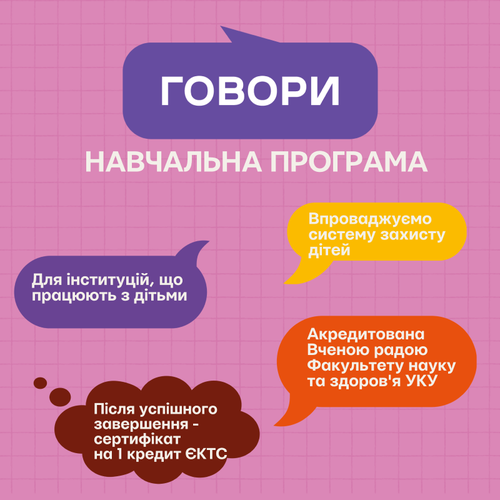
To support this, we developed the “SPEAK UP” training program for adults who work with children and want to introduce a modern child safeguarding system in their school, community, or organization.
The program teaches participants how to create a safe environment where every child feels supported and adults know how to act in the best interests of the child.
Participants will gain more than just theory about safety — they will receive practical steps, recommendations, and tools to help make child safeguarding systematic, effective, and part of everyday practice.
The program will be useful for:
teachers and educational teams;
school administrators and staff responsible for child safety;
libraries and children’s leisure centers;
community and youth organizations that work with children;
teams running educational, sports, or cultural programs for children.
During the program, you will receive:
The materials are organized by age group — primary, middle, and high school. They include online courses, exercises, posters, and interactive activities that help children learn about personal boundaries, safety rules, and how to ask for help.
Guides with lesson plans, instructions for teachers and parents, and practical tips on how to talk to children about difficult topics and build a culture of trust at school.
Key components of a safeguarding system and practical steps that help create an atmosphere of trust and support at school or in any space for children.
Online sessions with experts from the Center for Child Dignity, opportunities to ask questions, and experience sharing among participants.
Upon completion of the program, participants receive a certificate worth 1 ECTS credit.
We want every school in Ukraine to be a place where children feel safe, where their voices are heard, and where adults act responsibly and professionally. Our experience in Lviv shows that change is possible when schools have clear rules, trained adults, and accessible support tools for children.
Our Achievements in Education
The work of the Center for Child Dignity has already reached a significant part of Ukraine’s educational community:
10 regions of Ukraine have participated in training as part of the “Safeguarding: Child Safety in Educational Environments” project.
More than 10,000 educators have completed the Center’s online and in-person training on creating safe school environments.
131 schools in Lviv are implementing the “SPEAK UP” project.
More than 80,000 students in Lviv have completed personal safety training.
More than 480 representatives of educational institutions from other regions of Ukraine and abroad have participated in the “SPEAK UP” training program.
These results demonstrate that systemic change is possible — and it is already happening.
Our Vision for a Safe School
We aim for every educational institution to have:
Child Safeguarding Policy
An internal institutional document that includes a code of conduct and clear response procedures.
Designated Safeguarding Officer
Trained to receive reports and coordinate the appropriate response.
Accessible Support Tools for Children
Clear, child-friendly reporting channels that children can easily use to ask for help when they feel unsafe.
Trained Educators
Able to recognize risks, support children, and act in their best interests.
Educational Materials for Children and Parents
Help foster a culture of trust, respect, and zero tolerance for violence.
Creating a safe educational environment is a shared journey. At the Center for Child Dignity, we support schools, educators, and communities at every stage — from research and training to implementing safeguarding standards.
Together, we can ensure that every child feels safe and knows that their voice matters.