A safe childhood ecosystem at school: headteachers from Zaporizhzhia took part in a training session as part of the ‘HOVORY’ project
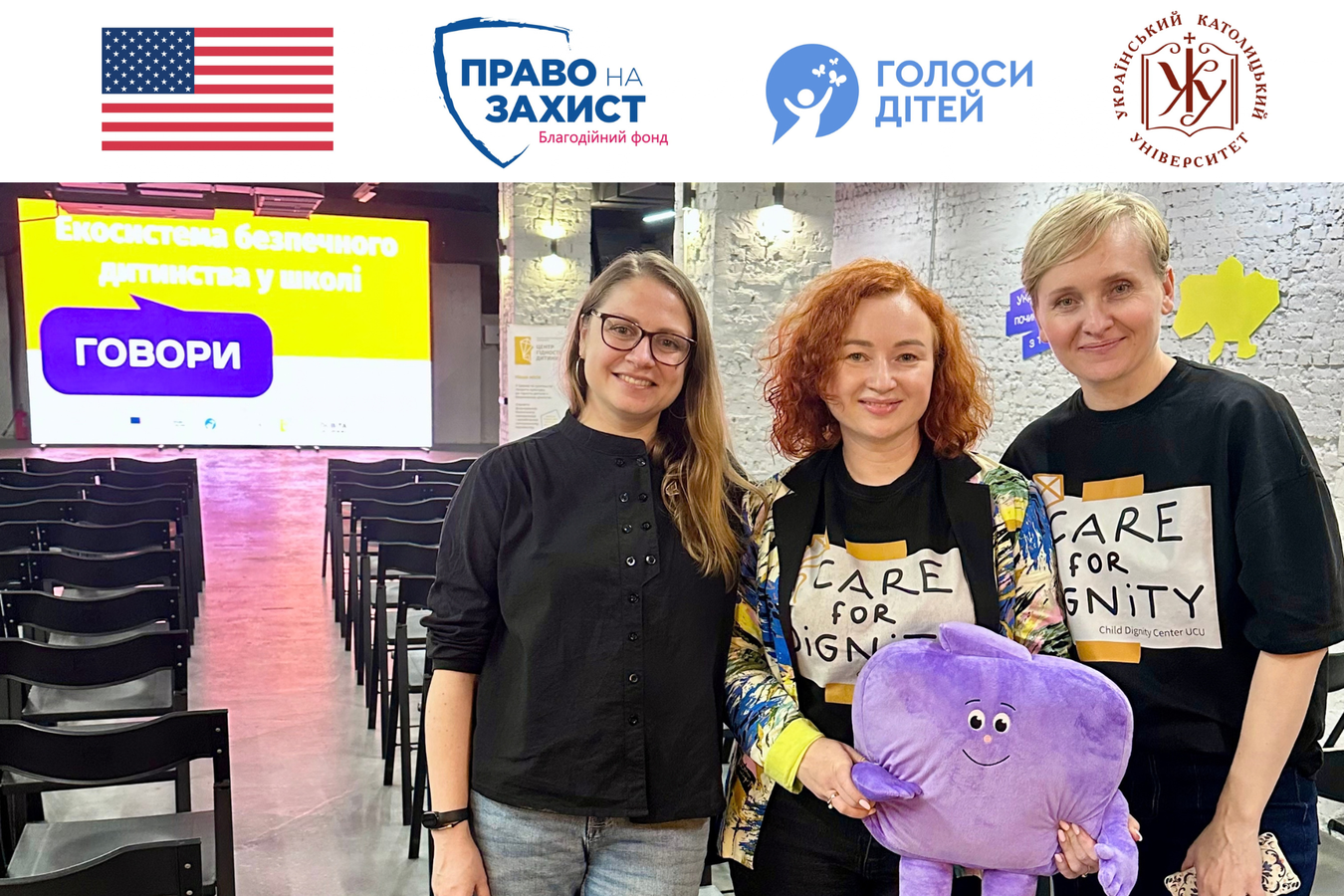
Experts from the UCU Child Dignity Centre introduced school heads in Zaporizhzhia to the ‘HOVORY’ model and the possibilities for implementing it in schools, whilst also discussing child protection standards, the principles of creating a safe environment, and the importance of having safe adults around.

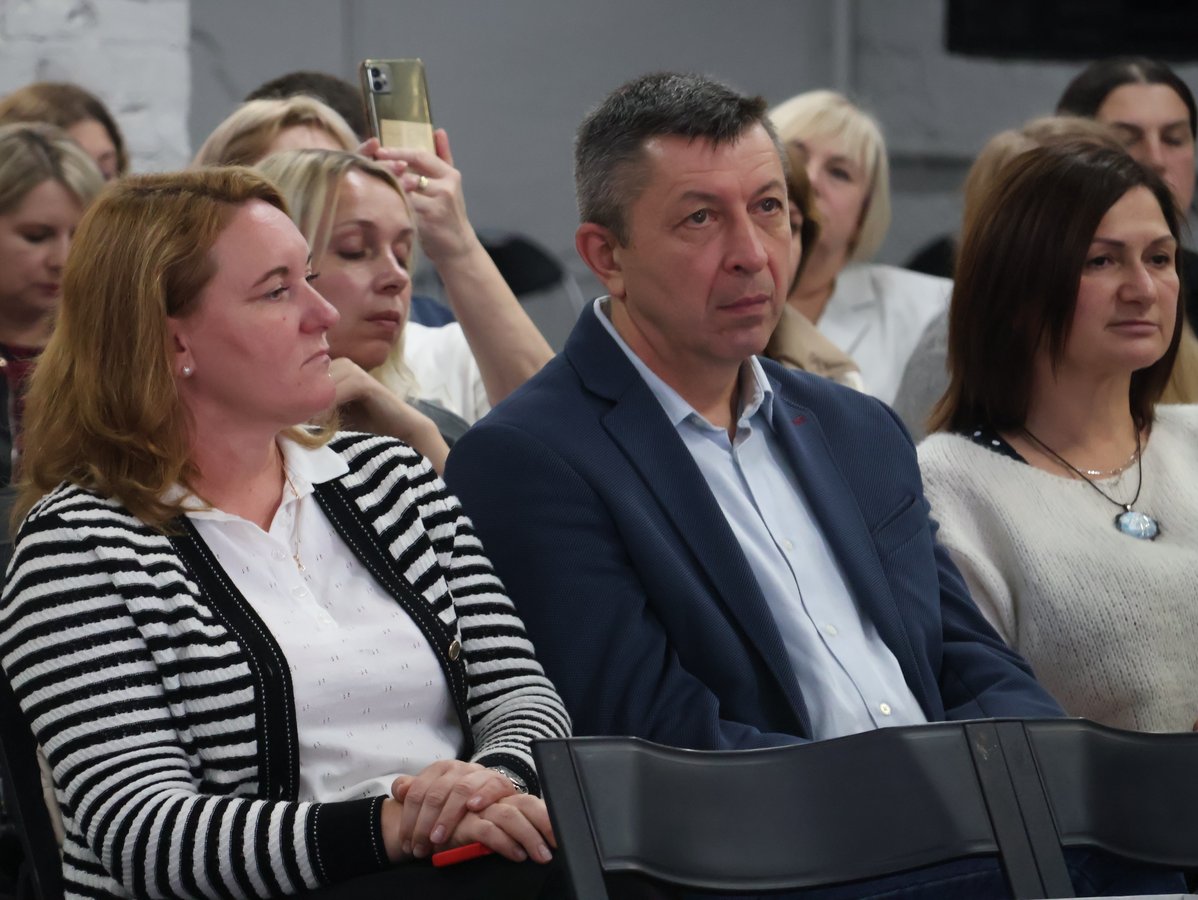
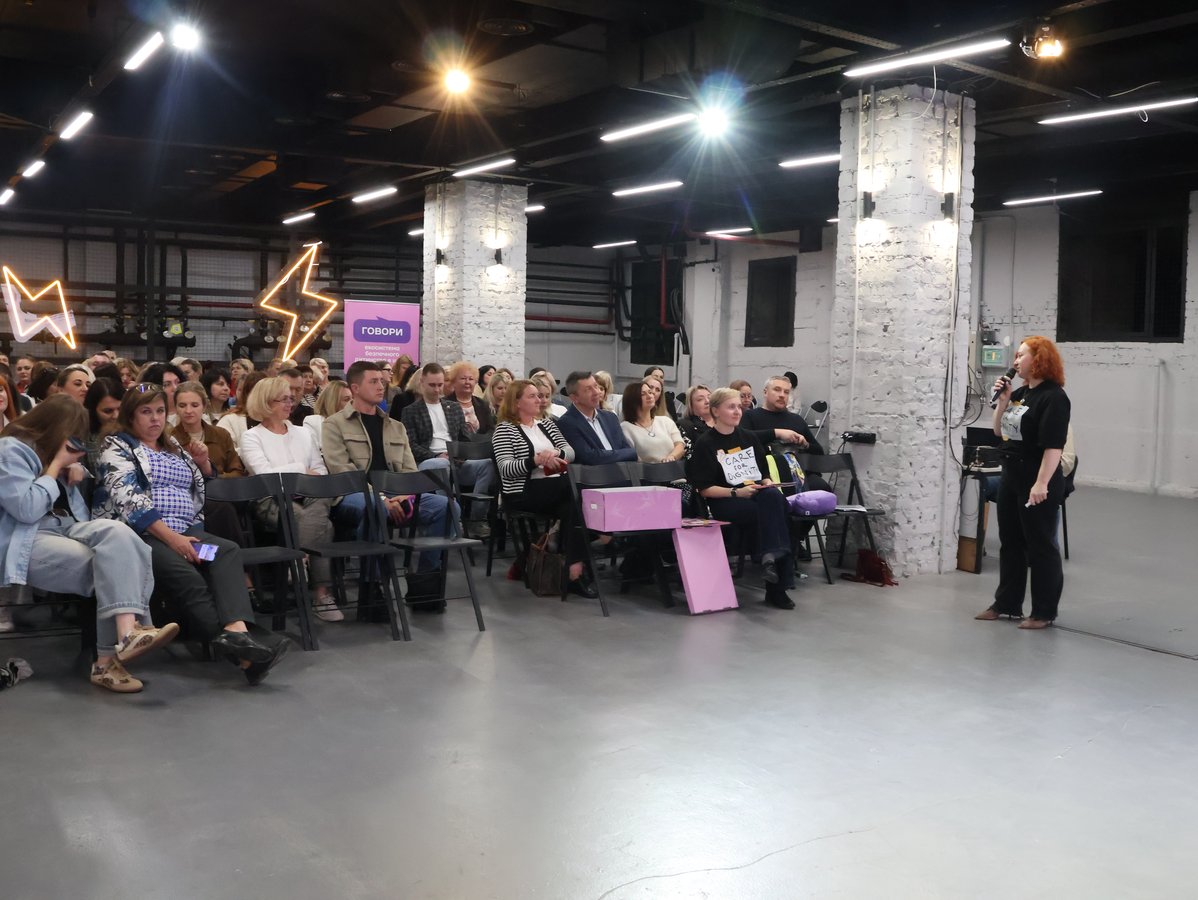
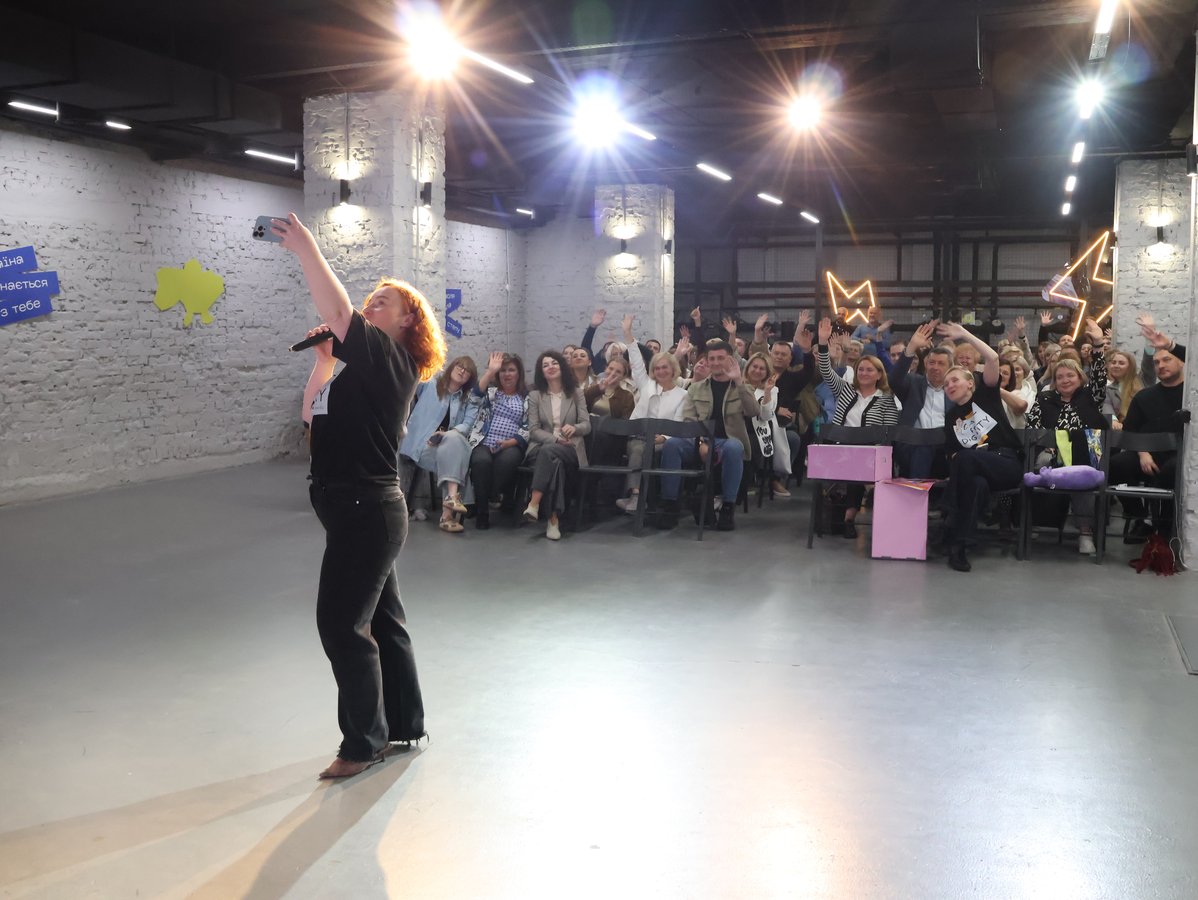
90 school heads from Zaporizhzhia took part in the meeting entitled “‘HOVORY’: An Ecosystem for a Safe Childhood at School”.
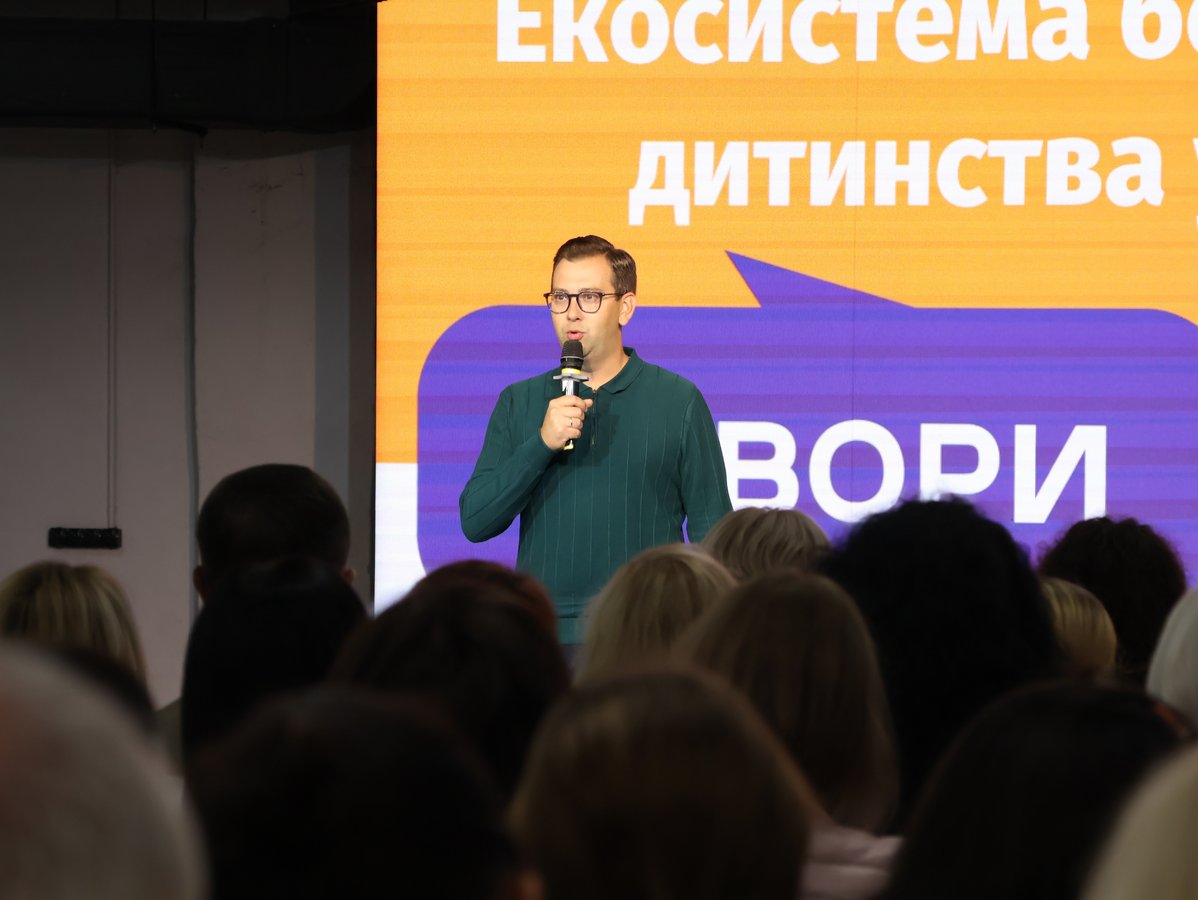
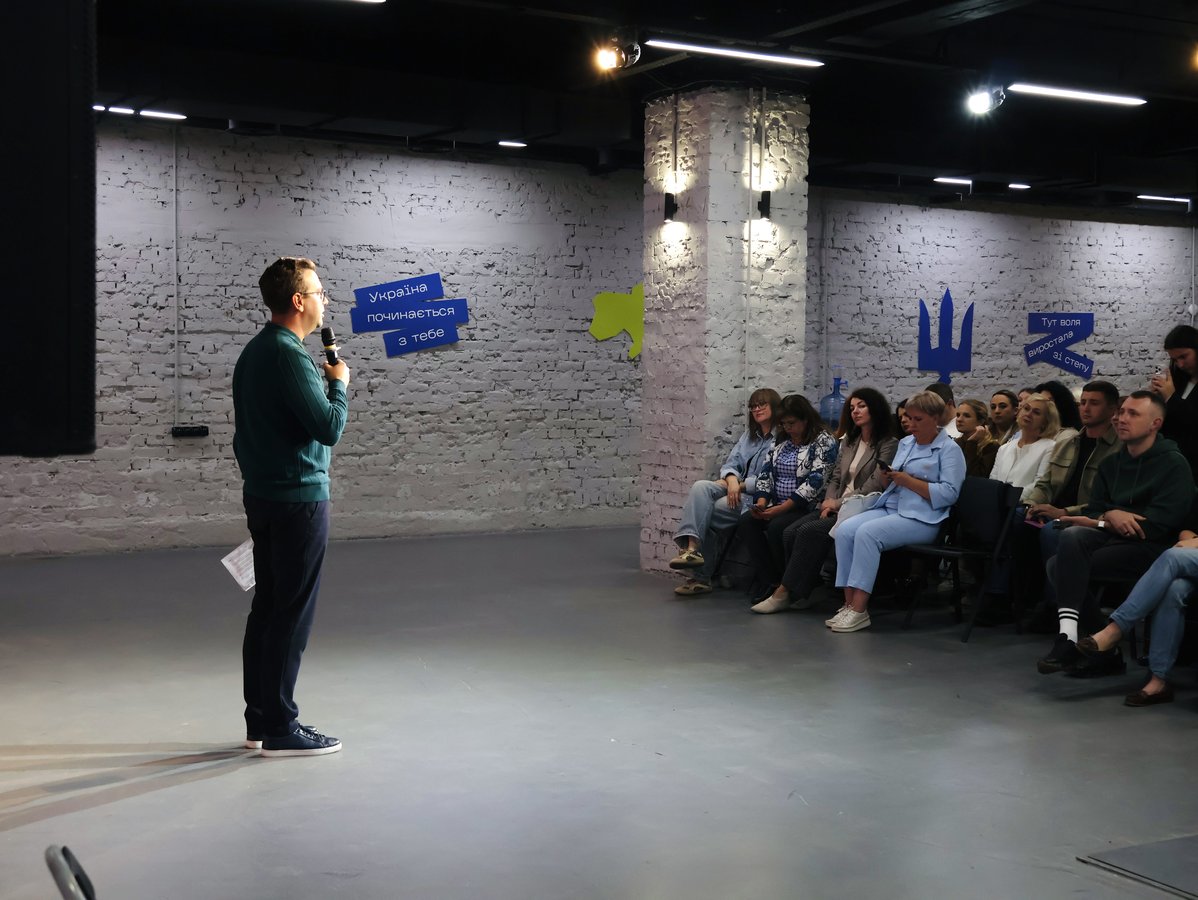
During the opening of the event, Vitalii Lysenko, First Deputy Director of the Department of Education and Science at Zaporizhzhia City Council, thanked the Centre for the Dignity of the Child for its work and cooperation.
“We are currently looking to you as a model in matters relating to the protection of children’s rights and the development of this area,” emphasised Vitaliy Lysenko.


He added that in recent years, Zaporizhzhia has become a leader in Ukraine in implementing safe, in-person learning within protective structures. This encompasses full-time education, meals, afternoon naps in nurseries, clubs, extracurricular activities and physical education.
“Our region is also a leader in the construction of underground schools. No other region is building them so quickly, to such a high standard, or in such numbers. We therefore really do have something to be proud of,” remarked the First Deputy Head of the Zaporizhzhia Department of Education and Science.
Vitalii Lysenko pointed out that over the last three years, Zaporizhzhia has focused on creating a safe infrastructure for educational institutions. Now, the main concern is the children’s sense of safety. This encompasses mental health, a sense of psychological safety, comfort and psychological stability for everyone involved in the educational process.
‘We are now at the start of an extremely important initiative. The task before us is to teach teachers, parents and children not to be afraid to speak up and express their feelings. We understand that 99 per cent of success lies in timely communication – in not being afraid to voice a problem. Once this is done, the problem becomes much easier to resolve for the child, the teacher and the parents alike. That is why we will be actively involved in this wonderful initiative – the ‘HOVORY’ project,” emphasised Vitalii Lysenko.


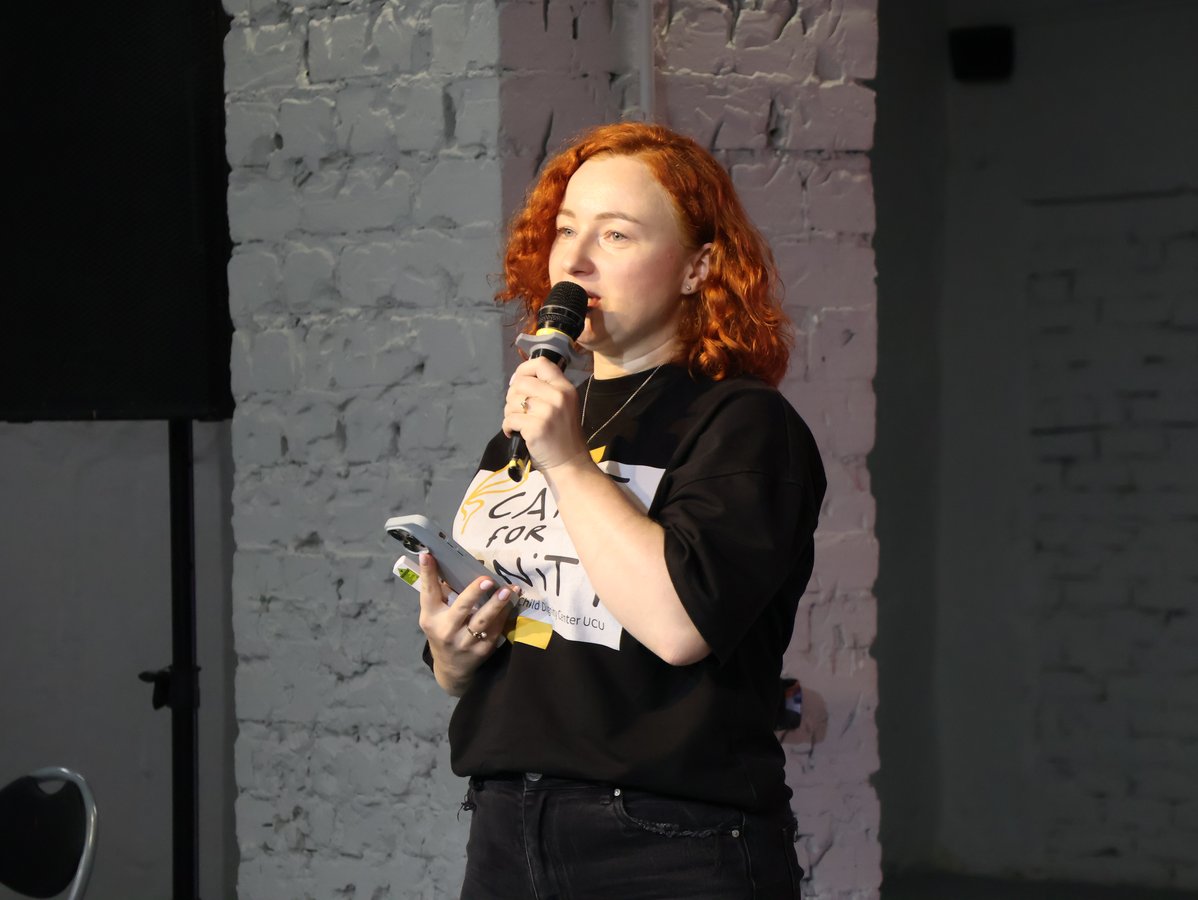
Natalia Tarnovska, head of projects and programs in the Education direction at the UCU Child Dignity Centre, thanked the Zaporizhzhia city authorities for their cooperation and their day-to-day work: ‘What you are doing is incredible. We are immensely grateful to you, teachers and educators, for standing firm, for loving your work and the children, and for continuing to work tirelessly, despite the incredibly difficult circumstances; for staying here and continuing to build, as far as possible, a happy and safe childhood.”
Natalia Tarnovska emphasised that, for the team at the UCU Child Dignity Centre, the opportunity to implement the ‘HOVORY’ project and work together to create a safe environment for children in Zaporizhzhia is extremely valuable.


She spoke about the activities of the Child Dignity Centre, in particular the ‘HOVORY’ project as a comprehensive model for building a safe environment for children in the field of education.
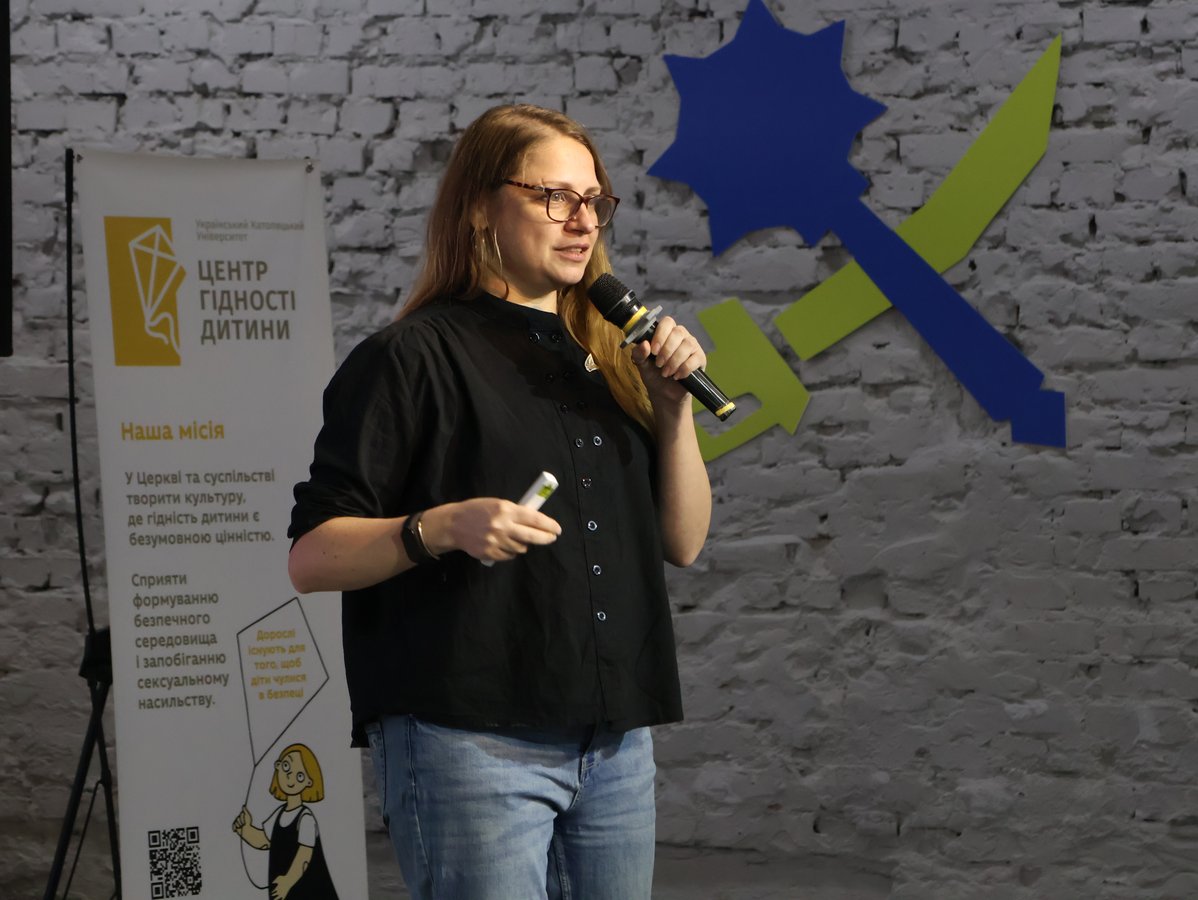
Ivanka Rudakevych, head of the “Church” division at the UCU Child Dignity Centre, shared with those present the principles for creating a safe environment for children at school and emphasised the importance of a safe adult being present alongside the child.
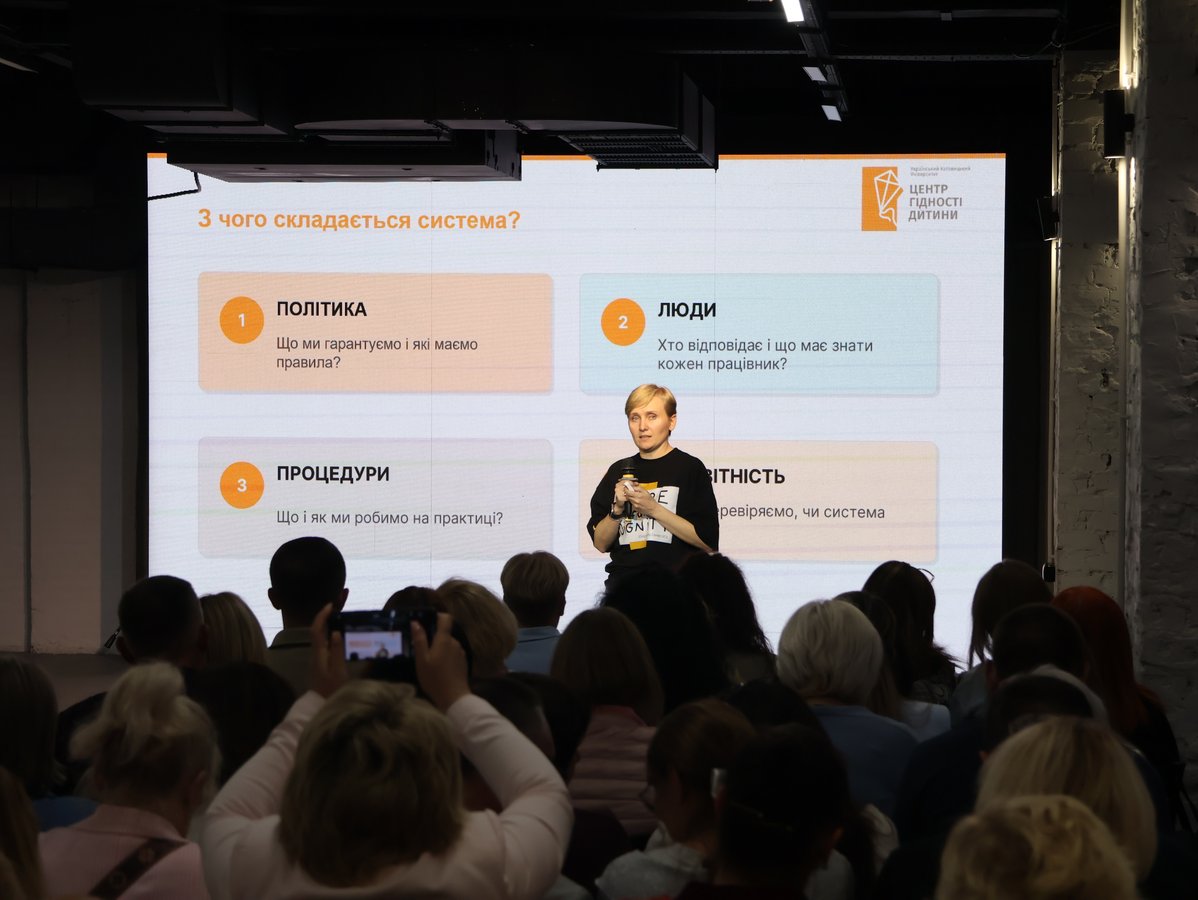
Iryna Vakulina, head of the ‘Civil Society’ division, informed those present about child safety standards and their components. She noted that, as part of the ‘HOVORY’ project, the Centre’s experts will help schools in Zaporizhzhia to develop a protection policy, a code of conduct and a procedure for responding to dangerous situations, all of which are mandatory under current legislation for all institutions working with children.
“It is important for educational institutions not only to declare that children are safe, but also to have a clear system that works on a day-to-day basis,” said Iryna Vakulina. ‘A child protection policy establishes common rules and principles; a code of conduct helps adults understand the boundaries of acceptable interaction; and a clear response procedure provides guidance on what to do when a dangerous situation is reported. When these elements are clear to all staff, the school can respond not on an ad hoc basis, but consistently and in the best interests of the child.”


“This is a good start to our joint work — meeting in person with the heads of all schools in Zaporizhzhia, getting to know one another and exchanging experiences. There are many steps ahead that we will take together with the city team, headteachers and teachers. It is important to us that ‘HOVORY’ doesn't remain a set of separate tools, but becomes part of the school’s everyday culture of safety — a culture in which children are not afraid to talk about what is troubling them and have adults nearby who are ready to listen and help,” emphasised Nataliia Tarnovska.
Experts from the UCU Child Dignity Centre also familiarised themselves with the work of an underground school in Zaporizhzhia. It should be noted that there are a total of 90 schools operating in person in the city, 12 of which are underground. The “HOVORY” project will be implemented in each of them.


The project is being implemented thanks to the generous support of the Government of the United States of America. The Ukrainian Catholic University is responsible for the content, which does not necessarily reflect the views of the Government of the United States of America.